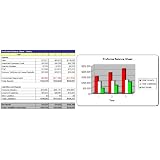
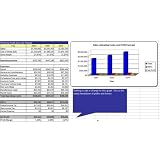
While a 20-year investment of $25,000 in the stock market may grow to an impressive $174,000, leading to a modest annual cash flow of 3.5% in retirement, this figure is dramatically overshadowed by the potential of strategically managed real estate. In fact, through the advanced real estate techniques discussed in the accompanying video, the same initial investment, when deployed into rental property investing, can yield over triple the cash flow by retirement, demonstrating a powerful case for tangible assets. This significant disparity is frequently overlooked by investors who focus solely on raw appreciation numbers.
The insightful discussion by Scott Barrett, a seasoned realtor with an accounting background, delves into the essential financial analyses required to truly evaluate and optimize rental properties. His expertise is crucial for investors seeking to move beyond basic metrics and engage with the “nitty-gritty” of maximizing their real estate portfolios. Key concepts, such as comparing properties, understanding the power of leverage, and strategically managing existing assets, are thoroughly explored, offering a robust framework for sophisticated investors.
Understanding Investment Performance with Cap Rate
Initially, when evaluating a rental property, net cash flow is often considered the primary indicator of performance. For instance, a property generating $10,000 in annual net cash flow might seem appealing at first glance. However, this figure, when considered in isolation, can be misleading and insufficient for a comprehensive assessment.
A $10,000 net cash flow from a $1 million property represents a mere 1% return, which is widely considered poor. Conversely, the same $10,000 from a $100,000 property signifies a 10% return, indicating a far more attractive investment. Therefore, for an accurate comparison across different properties, an additional metric is essential.
The Cap Rate Equation Explained
The Capitalization Rate, or Cap Rate, is introduced as the standard metric for comparing disparate rental properties. This calculation normalizes the property’s income against its value, providing a clearer picture of its earning potential relative to its cost. The equation for Cap Rate is straightforward: Net Operating Income (money in minus money out) divided by the property’s value.
Consequently, the Cap Rate allows investors to directly compare a $1 million property yielding $10,000 net income with a $100,000 property yielding the same amount. While advanced financial metrics such as Internal Rate of Return (IRR) are also utilized in the industry, the Cap Rate is favored for its simplicity in initial comparative analyses. The focus remains on making complex financial concepts accessible for strategic decision-making in rental property investing.
Real Estate vs. Stocks: The Power of Leverage in Rental Property Investing
When considering wealth accumulation, a common comparison is made between real estate and the stock market. Over the past fifty years, the stock market has demonstrated an average compounded return of 10.18%, comprising approximately 7.05% in appreciation and 3.3% in dividends. This consistent growth trajectory is often cited by financial planners, who advise against withdrawing more than 3.5% of a portfolio annually to preserve capital during retirement.
However, the returns generated by real estate are often misunderstood, extending beyond mere appreciation. Real estate investment yields include property appreciation, regular cash flow from rentals, and equity accumulation through principal paydown on loans. These multiple streams of return create a compelling argument for real estate, especially when compared with stock market performance.
The Leverage Advantage in Real Estate
A critical differentiator for rental property investing is the strategic use of leverage. While stocks may appreciate at a slightly higher rate, such as 7% annually, this percentage is applied to the investor’s direct capital input. For instance, a $25,000 stock investment appreciating at 7% generates returns on that $25,000.
Conversely, in real estate, a $25,000 down payment on a $100,000 property means that the investor effectively controls an asset four times the size of their initial equity. If this $100,000 property appreciates at 6% annually, the return is calculated on the full $100,000, not just the $25,000 down payment. This mechanism significantly amplifies returns, allowing for substantial wealth creation over time. Thus, even with a lower appreciation rate, the leveraged real estate investment dramatically outperforms its unleveraged stock market counterpart, demonstrating the profound impact of borrowed capital in advanced real estate techniques.
Accessing Real Estate with Retirement Accounts
A less commonly known but powerful strategy involves utilizing existing retirement accounts, such as 401(k)s and IRAs, for real estate investment. Through self-directed IRAs (SDIRAs), investors are permitted to purchase rental properties, thereby diversifying their retirement portfolios beyond traditional stocks and bonds. This method allows for the compounding benefits of real estate—appreciation, cash flow, and loan principal reduction—to accrue within a tax-advantaged account.
However, strict IRS regulations govern SDIRAs, including rules against “self-dealing” and specific types of investments. Consequently, careful consideration and professional guidance are typically advised when pursuing this advanced approach. The integration of real estate into retirement planning offers an avenue for enhanced portfolio growth, especially when long-term strategies are employed.
Strategic Market Analysis: A Deep Dive into Denver’s Rental Market
Effective rental property investing requires a deep understanding of market dynamics, as exemplified by the analysis of the Denver real estate market. Over the last four decades, Denver has exhibited robust appreciation rates, averaging 6.3% for single-family homes and 5.9% for condominiums. While market conditions fluctuate, these long-term trends indicate a resilient and growing environment for real estate investors.
Such sustained growth is often supported by fundamental economic and demographic factors. Therefore, a comprehensive market analysis extends beyond simple appreciation rates, incorporating broader economic indicators to project future performance. This ensures that investment decisions are based on a holistic view of the market’s health and potential.
Key Indicators for Market Health
Several indicators are closely monitored to assess the health and sustainability of a real estate market. Debt-to-income ratios, for instance, provide insight into the affordability and financial capacity of residents to sustain property prices. A healthy debt-to-income ratio suggests that prices are supported by actual earning power, reducing the risk of an overheated market. Furthermore, population dynamics, including net migration and natural increase, are crucial.
Denver’s strong net migration and projected population growth signal a continuous demand for housing, thereby supporting ongoing appreciation and robust rental markets. These demographic shifts directly influence vacancy rates and rental income stability, making them indispensable considerations for any investor evaluating an advanced real estate technique in a specific region.
Evaluating Cap Rates in Local Markets
While appreciation and population growth provide a macro view, evaluating specific investment opportunities necessitates granular analysis, particularly concerning local Cap Rates. In the Denver market, a diverse range of Cap Rates can be observed, typically ranging from the mid-7s to low-9s, depending on the property type, location, and condition. Properties with Cap Rates in the 7s are generally accessible on the Multiple Listing Service (MLS), while those reaching the 8s are less common but attainable.
Higher Cap Rates, sometimes reaching the 9s, are often found in areas that may present increased management challenges or perceived risks. For a balanced investment strategy, a Cap Rate around 6.8% is considered a reasonable and achievable target within the Denver market, balancing return potential with manageable risk. Understanding these local nuances is paramount for making informed investment decisions and successfully executing advanced real estate techniques.
Optimizing Existing Rental Properties: Refinancing and Portfolio Growth
The journey of rental property investing does not end with acquisition; continuous optimization of existing assets is equally vital for long-term success. Over time, property appreciation and consistent loan paydown contribute to a significant accumulation of equity. This accumulated equity becomes a powerful tool for strategic portfolio expansion, enabling investors to reinvest without injecting new external capital.
As equity is built, opportunities arise to leverage these gains for further growth. Consequently, existing properties are not just passive income generators but active components in a dynamic investment strategy, enabling ongoing capital reallocation and wealth creation. Advanced real estate techniques often involve harnessing this built-up value effectively.
Building Equity and Portfolio Expansion
Consider a scenario where a property, initially purchased with a 25% down payment and financed with a 15-year loan, appreciates at an average of 6% annually. After just five years, substantial equity will have accumulated, derived from both the property’s increased market value and the principal payments made on the loan. This readily available equity can then be accessed through a cash-out refinance.
The capital obtained from such a refinance can be strategically deployed to acquire additional rental properties. This method, as demonstrated in the video’s “two rentals” example, effectively compounds returns by multiplying the number of income-generating assets. While it introduces a degree of additional risk, the potential for significantly increased cash flow and accelerated wealth building makes it a cornerstone of advanced rental property investing strategies.
The Role of 1031 Exchanges
Another powerful tool for optimizing and expanding a rental property portfolio is the 1031 exchange, often referred to as a like-kind exchange. This provision of the IRS tax code permits investors to defer capital gains taxes when selling an investment property, provided the proceeds are reinvested into a “like-kind” property within specific timelines. This mechanism is invaluable for investors seeking to upgrade their portfolios, divest from underperforming assets, or consolidate multiple properties into a larger, more efficient investment.
For instance, an investor might sell a smaller, older rental property and, by utilizing a 1031 exchange, acquire a larger apartment complex or a property in a higher-growth market, all while deferring the significant tax burden that would typically be incurred. Navigating the stringent rules, including identification and closing periods (45 days and 180 days, respectively), necessitates meticulous planning and often the assistance of a qualified intermediary. However, the long-term tax deferral benefits of 1031 exchanges are indispensable for high-level rental property investing and sustained portfolio growth.
Leveraging for Long-Term Wealth: A Core Principle of Rental Property Investing
Ultimately, the substantial difference in wealth accumulation between real estate and stock market investments often boils down to one fundamental principle: leverage. While stocks provide returns only on the capital directly invested, real estate offers the unique ability to control a much larger asset with a relatively small down payment. This enables a 6% appreciation on a $100,000 property to yield significantly more actual dollar value than a 7% return on a $25,000 stock investment. The amplification of returns through borrowed capital is a hallmark of sophisticated rental property investing.
However, it is important to note that without leverage, the long-term returns from a paid-off rental property are generally comparable to those from the stock market, albeit with the added complexities of property management. Consequently, the strategic and prudent use of leverage is recognized as the key differentiator, allowing investors to significantly accelerate their journey towards financial independence and substantial long-term wealth through advanced real estate techniques.
Unlocking Advanced Rental Investing: A Q&A with Scott Barrett
What is a Cap Rate and why is it important for rental property investors?
The Cap Rate (Capitalization Rate) is a key metric used to compare the earning potential of different rental properties. It helps investors understand a property’s income relative to its cost, by dividing its Net Operating Income by its value.
How does investing in rental properties compare to investing in the stock market?
Rental property investing can potentially yield significantly more cash flow by retirement compared to stock market investments with the same initial capital. Real estate offers returns from property appreciation, regular rental income, and equity built by paying down loans.
What does ‘leverage’ mean in real estate investing?
Leverage in real estate means using a small amount of your own money, like a down payment, to control a much larger asset. This amplifies returns because appreciation is calculated on the full value of the property, not just your initial investment.
Can I use my retirement funds to invest in rental properties?
Yes, you can use existing retirement accounts, like 401(k)s and IRAs, to invest in rental properties through self-directed IRAs (SDIRAs). This allows real estate benefits to grow within a tax-advantaged account, but it requires careful planning and adherence to IRS rules.