The allure of real estate investing has long captured the imagination of wealth builders, often appearing as a complex, capital-intensive endeavor. Many aspiring investors feel overwhelmed, believing the path to property ownership and portfolio growth is beyond their reach. However, as the accompanying video, drawing insights from Brandon Turner’s “Rental Property Investing,” deftly illustrates, strategic real estate investing remains a foundational pillar for building significant wealth.
Andrew Carnegie famously observed that a substantial majority of self-made millionaires built their fortunes through real estate. This isn’t mere coincidence; it’s a testament to the powerful, multi-faceted wealth generators inherent in property ownership. Understanding these mechanisms and applying structured strategies can demystify the process, turning perceived obstacles into actionable opportunities for anyone serious about accumulating long-term assets.
The Core Pillars of Real Estate Wealth Creation
Property ownership isn’t just about collecting rent. It’s about harnessing several powerful forces that collectively drive financial growth. The video highlights four primary wealth generators. Let’s delve deeper into each, understanding how they compound your investment.
Natural Appreciation: The Market’s Gentle Current
Consider the trajectory of average home prices in the U.S.: from $122,000 in the early 1990s to over $467,000 today. This significant increase illustrates natural appreciation, a property’s tendency to grow in value over time without direct owner intervention. Think of it like a tide lifting all boats.
- Inflation: As the cost of goods and services rises, so does the value of physical assets like real estate. Your purchasing power may diminish, but your property’s nominal value increases.
- Scarcity: Land is a finite resource. As populations grow and developable land shrinks, demand inevitably pushes prices upward.
- Supply and Demand: Economic health, job growth, and favorable demographic shifts create robust housing demand. When supply can’t keep pace, values climb.
- Economic Cycles: While markets have their peaks and troughs, the long-term trend for well-located real estate is upward. This isn’t “good old American greed” so much as a reflection of sustained economic expansion and human need for shelter.
A property bought for $18,000 in 1955 and sold for half a million today isn’t an anomaly; it’s a striking example of natural appreciation at work across generations. While no one expects such dramatic gains year over year, consistent annual appreciation, often averaging around 3%, provides a reliable tailwind for your investment.
Forced Appreciation: Engineering Your Equity
Unlike natural appreciation, forced appreciation is an active strategy. This is where an investor improves a property, directly increasing its value. It’s the difference between waiting for the market to lift your boat and installing a more powerful engine yourself.
Imagine purchasing a two-bedroom house and converting a neglected attic space into a third bedroom. You haven’t just added a room; you’ve potentially pushed the property into a higher value bracket, appealing to a broader market segment. Other common strategies include:
- Strategic Renovations: Upgrading kitchens, bathrooms, or adding curb appeal. These are often high-ROI projects that immediately resonate with buyers and appraisers.
- Functional Improvements: Repairing structural issues, replacing an old roof, or updating HVAC systems might not add aesthetic charm but significantly boost a property’s fundamental value and longevity.
- Zoning Changes/Permits: In some cases, obtaining permits for additional units or a change in land use can dramatically increase potential income and property value, transforming a single-family home into a duplex, for instance.
Savvy investors actively seek properties with “sweat equity” potential, knowing that a targeted investment in time and capital can yield disproportionate returns through forced appreciation.
Positive Cashflow: The Lifeblood of Your Portfolio
While appreciation is often passive, cashflow is the active income stream from your investment. This is the net profit remaining after your rental income covers all operating expenses. Think of it as the steady heartbeat of your real estate business.
Your tenant’s monthly rent payments become your primary income. From this, you subtract expenses such as your mortgage principal and interest, property taxes, insurance premiums, utilities (if covered by the landlord), maintenance and repairs, and property management fees. What remains is your positive cashflow.
Many investors prioritize stable, long-term cashflow over aggressive appreciation. A property with robust cashflow provides financial flexibility, allowing you to cover unexpected costs, reinvest in your portfolio, or simply enjoy a consistent stream of passive income. It’s your buffer against market fluctuations and your engine for sustained growth.
Tax Advantages: The Investor’s Edge
One of the most compelling aspects of real estate investing involves its inherent tax benefits. The video aptly notes how prominent figures like Donald Trump and Robert Kiyosaki leverage these advantages. Rental property investors can enjoy a wide array of deductions, effectively lowering their taxable income.
- Operating Expenses: Just like any business, you can deduct costs associated with running your property, including maintenance, repairs, property management fees, legal fees, advertising for tenants, and utilities.
- Owner Expenses: Certain costs you incur as the owner, such as business use of a personal vehicle for property visits, or a dedicated home office for managing your portfolio, can be deductible.
- Depreciation: This is a powerful “phantom” deduction. The IRS allows investors to deduct a portion of the property’s value (excluding land) each year, accounting for its wear and tear, even if the property is actually appreciating. This can significantly reduce taxable income without an actual cash outlay.
- Mortgage Interest: A substantial portion of your monthly mortgage payment, the interest, is typically tax-deductible.
- Capital Gains: When you sell an investment property, profits are often taxed as capital gains, which can be capped at 20% for long-term holdings, often lower than ordinary income tax rates.
- 1031 Exchange: Perhaps the most advanced strategy mentioned, the ability to “defer your tax bill” by reinvesting sale proceeds into another “like-kind” investment property (a 1031 exchange) allows investors to expand their net worth without immediate capital gains taxes. This can accelerate portfolio growth exponentially.
Consulting with a Certified Public Accountant (CPA) specializing in real estate is crucial to maximize these benefits and ensure compliance.
Equity Buildup Through Loan Paydown: The Tenant as Your Partner
Imagine your rental property as a massive piggy bank valued at $400,000. You contribute an $80,000 down payment (your initial equity), and a lender provides the remaining $320,000 as debt. The magic begins when your tenant starts contributing to this piggy bank every single month.
Each rent payment covers not only interest but also a portion of the loan principal. Over time, as the principal balance decreases, your ownership stake—your equity—grows. Your tenants, in essence, become silent partners, diligently paying down your debt and increasing your wealth without you lifting a finger. This loan amortization, combined with appreciation, steadily expands your net worth, making your initial investment multiply through the power of leverage.
Strategic Entry: Finding Your First Rental Property
Venturing into real estate requires a strategic approach, especially for your first acquisition. Brandon Turner provides clear guidelines to ensure you secure a deal that builds a strong foundation for your portfolio. These aren’t just suggestions; they are guardrails for smart investing.
Target Multi-Family Properties for Reduced Risk
For many new investors, a multi-family property (like a duplex, triplex, or fourplex) is an ideal starting point. Unlike a single-family home where a vacancy means 100% loss of income, a multi-family unit offers diversification.
If one unit goes vacant, the income from the other units can significantly offset the loss, providing a crucial margin of safety. Moreover, collecting multiple rents can lead to higher aggregate cashflow, accelerating your path to financial goals. This strategy reduces volatility and helps new investors manage the learning curve with greater stability.
The $200 Monthly Cashflow Minimum
A critical metric for any rental property is its ability to generate positive cashflow. The video recommends aiming for at least $200 per unit per month *after* all expenses, including allowances for potential vacancies and future property management, are factored in. This isn’t an arbitrary number. It provides a healthy buffer against unexpected repairs, increases in taxes or insurance, and helps to cover periods of vacancy. Without a robust cashflow, you risk operating at a loss or tying up your capital in an underperforming asset.
Purchase Below Market Value: Your Margin of Safety
Smart investors buy value, not just property. A key guideline is to purchase a property for at least 80% of its current market value. This creates an immediate “margin of safety.” If the market experiences a downturn, say 10-15%, you’re less likely to find yourself “underwater,” owing more than the property is worth. Such deals aren’t always common on the open market, but they are discoverable. “Motivated sellers” often hold the key:
- Distressed Situations: Foreclosures, short sales, or properties from owners facing financial hardship.
- Life Events: Divorce, job relocation, probate (estate sales), or tired landlords eager to offload a burdensome property.
- Off-Market Deals: Networking with agents, wholesalers, or even direct mail campaigns can uncover properties not listed publicly.
These situations often lead to properties being sold at a discount, offering that vital equity cushion from day one.
10% Forced Appreciation Within the First Year
Beyond buying low, actively increasing value is paramount. Look for properties where minimal, cost-effective improvements can boost value by at least 10% within the first year. This requires a keen eye for potential. It’s not about luxury renovations, but strategic upgrades:
- Minor cosmetic repairs (paint, flooring).
- Updating outdated fixtures.
- Enhancing curb appeal (landscaping, exterior paint).
- Small functional upgrades (e.g., adding a washer/dryer hookup if missing).
This immediate value add not only provides a quick equity boost but also allows for potential refinancing strategies to pull out capital later (as seen in the BRRRR method).
Potential for 3% Annual Natural Appreciation
While forced appreciation is within your control, continued natural appreciation provides long-term growth. Aim for properties in neighborhoods with the potential to appreciate at least 3% annually after the initial year. This aligns with historical averages but requires careful due diligence on the location itself, which we will explore further. It’s about investing in markets with strong fundamentals that promise sustained growth.
Diversified Paths to Real Estate Riches: Key Strategies
The beauty of real estate investing lies in its versatility. The video highlights three proven strategies, each catering to different investor profiles and risk tolerances. Mastering these methods provides a powerful arsenal for building your portfolio.
The Traditional Rental Method: The Steady Accumulator
The traditional method is the classic buy-and-hold strategy, focusing on long-term wealth accumulation through consistent cashflow, appreciation, and loan paydown. Here, you typically save a 20% down payment (or less if you qualify for favorable financing) and acquire a multi-family property that fits the guidelines mentioned earlier: below market value, needing minimal work for forced appreciation, and positioned for sustained natural appreciation.
Once you secure a great tenant, the positive cashflow becomes your engine. Instead of spending it, you reinvest it. This cashflow accumulates, eventually allowing you to fund the down payment for your next property, creating a compounding effect that can lead to significant portfolio expansion without constantly injecting new capital from your primary income. It’s a marathon, not a sprint, focused on consistent, predictable growth.
House Hacking: Living for Free, Investing for Growth
House hacking is a creative, low-entry-barrier strategy often favored by new investors. The core idea is simple: buy a property, live in one part of it, and rent out the rest to significantly reduce or even eliminate your own housing costs. This effectively allows you to live for free while tenants pay down your mortgage and build your equity.
Common house hacking approaches include:
- Roommates: Purchasing a single-family home and renting out spare bedrooms.
- Short-Term Rentals: Utilizing platforms like Airbnb or Booking.com to rent out a spare room or a section of your home.
- Multi-Unit Properties: The most popular form of house hacking involves buying a duplex, triplex, or fourplex. You reside in one unit, and the rents from the other units cover most, if not all, of your mortgage.
A significant advantage of house hacking multi-unit properties (up to four units) is the ability to use residential loans, such as an FHA loan. FHA loans are government-insured mortgages designed to assist low to moderate-income families. They require a much lower minimum down payment—as low as 3.5% compared to the typical 20% for investment properties—and are more forgiving on credit scores.
However, FHA loans come with caveats. Borrowers must pay mortgage insurance premiums (MIP) for the life of the loan (or a significant portion), which adds to monthly costs. Also, the property must be owner-occupied. Despite these additional costs, the drastically reduced upfront capital makes house hacking an accessible entry point into real estate investing for many, allowing them to gain landlord experience and build equity without a large initial investment.
The BRRRR Method: Recycling Capital for Rapid Expansion
The BRRRR Method stands for Buy, Rehab, Rent, Refinance, Repeat. This powerful strategy allows investors to acquire multiple properties without constantly tapping into their personal savings. It’s a cyclical approach to capital recycling, perfect for scaling a portfolio.
- Buy: Identify a distressed property that can be purchased significantly below market value, often requiring substantial work.
- Rehab: Systematically repair and renovate the property to force appreciation. The goal here is to increase its value well beyond the cost of repairs.
- Rent: Secure high-quality tenants at market rates, ensuring positive cashflow from the newly improved property.
- Refinance: Once the property has been rehabbed and rented, its value has increased. You then refinance the property based on its new, higher appraised value. The goal is to obtain a new loan that is larger than your original purchase price plus rehab costs, allowing you to pull out most, if not all, of your initial cash investment.
- Repeat: With your original capital recovered, you can then deploy it into another distressed property, repeating the entire BRRRR cycle.
This method requires precise deal analysis. Brandon recommends looking for properties where you can purchase at 70% of the After Repair Value (ARV), minus the cost of repairs. For instance, if a property will be worth $300,000 after $25,000 in repairs, your target purchase price would be ($300,000 * 0.70) – $25,000 = $185,000. This ensures enough equity is built during the rehab phase to make the refinance viable and profitable. The BRRRR strategy is a dynamic, capital-efficient way to rapidly grow a real estate portfolio.
Mastering Property Analysis: A Financial Deep Dive
Successful real estate investing hinges on accurate financial analysis. You must be able to objectively assess a property’s potential to determine if it’s a sound investment. Let’s walk through a practical example, breaking down each step of the financial evaluation process.
Step 1: Calculate Total Project Cost
Before any commitment, understand the full financial outlay. This includes not just the purchase price, but all associated costs to get the property ready for rent.
- Purchase Price: The actual price you pay for the property. (Example: $75,000)
- Closing Costs: Fees associated with the transaction, covering items like loan origination fees, title insurance, appraisal fees, legal costs, and prepaid expenses (e.g., property taxes, insurance). (Example: $2,500)
- Pre-Rent Holding Costs: Expenses incurred before a tenant moves in, such as mortgage payments, utilities, and taxes during renovation or vacancy periods. (Example: $1,200)
- Estimated Repairs: The cost of all necessary renovations and improvements. This requires thorough due diligence to avoid underestimating. (Example: $17,250)
Adding these together gives us the Total Project Cost: $75,000 + $2,500 + $1,200 + $17,250 = $95,950.
Step 2: Determine Cash Needed Out-of-Pocket
Next, ascertain how much actual cash you need to bring to the table. This depends heavily on your financing structure.
Assuming a 20% down payment on the purchase price (not the total project cost):
- Down Payment: $75,000 * 0.20 = $15,000
- Loan Amount: $75,000 * 0.80 = $60,000
Your total out-of-pocket cash will be the Total Project Cost minus the loan amount you receive: $95,950 (Total Project Cost) – $60,000 (Loan Amount) = $35,950 (Total Out-of-Pocket Cost).
Remember, this figure can be reduced through various strategies: leveraging FHA loans for lower down payments, performing some repairs yourself if you’re handy, or utilizing specific financing options like seller financing or private money loans. Each method alters your initial cash requirement and risk profile.
Step 3: Calculate Your Mortgage Payment
The mortgage payment is a significant monthly expense. This figure is readily available from your lender or via online mortgage calculators. You only need three inputs:
- Loan Amount: $60,000
- Loan Period: 30 years
- Interest Rate: 5%
For this example, your monthly mortgage payment would be approximately $322.09.
Step 4: Determine the Property’s Income Potential
Accurately assessing potential rental income is crucial. This involves thorough market research to understand comparable rents in the area for similar properties. Online platforms, local property managers, and real estate agents are invaluable resources.
If market research shows rents between $975 and $1,350 for a newly renovated house of this type, you might confidently set your rent at $1,200 per month, positioning it competitively within the higher end of the range given its fresh condition.
Step 5: Project Monthly Expenses
Creating a comprehensive list of all monthly operating expenses is vital. Don’t overlook potential future costs. These typically include:
- Mortgage payment (P&I): $322.09
- Property Taxes: (e.g., $150)
- Insurance: (e.g., $70)
- Vacancy Allowance: Estimate 5-10% of gross rent. (e.g., $1,200 * 0.08 = $96)
- Maintenance & Repairs: Budget 5-10% of gross rent. (e.g., $1,200 * 0.08 = $96)
- Property Management (if applicable): Often 8-12% of gross rent. (e.g., $1,200 * 0.10 = $120)
- Utilities (if landlord pays any): (e.g., $48 for water/sewer, trash, etc.)
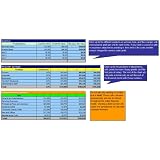
Summing these up gives you a Total Monthly Expense (for our example): $322.09 + $150 + $70 + $96 + $96 + $120 + $48 = $902.09 (close to the video’s $902.27).
Step 6: Evaluate the Deal – Cashflow and ROI
With all financial pieces assembled, you can now evaluate the property’s profitability.
- Monthly Cashflow: Total Income ($1,200) – Total Expenses ($902.09) = $297.91 per month.
- Annual Cashflow: $297.91 * 12 = $3,574.92 per year.
To understand your return on the capital you’ve invested, calculate the Cash-on-Cash Return:
- Cash-on-Cash Return: (Annual Cashflow / Total Out-of-Pocket Cash) * 100
- ($3,574.92 / $35,950) * 100 = 9.94%
A 9.94% cash-on-cash return is a strong indicator of a good deal, especially when you factor in the additional wealth generators not included in this calculation: loan paydown by the tenant and natural appreciation. This holistic view confirms the property’s long-term potential.
The Unseen Hand: Location and Team Synergy
Beyond the numbers, qualitative factors profoundly impact an investment property’s success. Location remains paramount, and building a robust support team is indispensable.
Location, Location, Location: Beyond a Catchphrase
The adage holds true: where your property sits is often as important as the property itself. Intelligent investors scrutinize several location-specific factors:
- Crime Rates: High crime makes attracting and retaining quality tenants incredibly challenging. Research local crime statistics to ensure a safe, desirable environment. A stable, secure neighborhood fosters tenant longevity and reduces property damage risks.
- School Districts: Properties within highly-rated school districts command higher rents and experience lower vacancy rates. Families prioritize quality education, making these areas consistently in demand for long-term residents.
- Population Growth & Demographics: Areas with growing populations and positive demographic trends (e.g., influx of young professionals, expanding job market) typically support increasing rents and property values over time. More people mean more demand for housing.
- Proximity to Local Businesses & Amenities: Strong economic markets attract residents. Look for areas near major employers, vibrant downtowns, shopping centers, restaurants, parks, and public transportation. Businesses like Starbucks invest millions in market research to identify prime locations; piggybacking on their due diligence can be a smart move for your property investing strategy.
Your Real Estate Team: The Backbone of Your Business
Real estate investing is a team sport. No single individual possesses all the necessary expertise. Building a network of trusted professionals is crucial for staying informed, protected, and productive. Think of it as assembling your special forces unit for property investing.
- Your Spouse/Partner: Often overlooked, a supportive partner who shares your vision is arguably your most critical team member. Their buy-in and collaboration eliminate internal friction and provide invaluable emotional and practical support.
- Real Estate Agent: A buyer’s agent specializing in investment properties can be your eyes and ears on the ground. They understand local market conditions, identify off-market deals, and provide crucial insights into neighborhood nuances and property values.
- Lender/Mortgage Broker: Unless you’re paying cash, a good lender is essential. They help you navigate financing options, secure favorable rates, and ensure you have access to capital for future acquisitions. A skilled broker can uncover loan products perfectly suited to your specific investment goals.
- Contractors & Handymen: These are your go-to for repairs and renovations. A reliable, trustworthy network of tradespeople is invaluable for maintaining property value, keeping tenants happy, and executing forced appreciation strategies efficiently.
- Bookkeeper: Real estate generates numerous income and expense streams. A meticulous bookkeeper keeps your financials organized, tracks cashflow, and prepares everything for tax season, freeing you to focus on strategic growth.
- Certified Public Accountant (CPA): A CPA specializing in real estate can unlock significant tax advantages, provide strategic tax planning, and ensure you comply with all regulations. Their expertise can save you thousands annually through smart depreciation, deduction, and capital gains strategies.
- Insurance Agent: Protecting your assets is non-negotiable. An experienced insurance agent understands the specific risks of investment properties, helping you secure adequate coverage at competitive rates, particularly as your portfolio expands.
- Property Manager: For truly passive income, a competent property manager is a game-changer. They handle tenant screening, lease agreements, rent collection, maintenance calls, and eviction processes. A great property manager ensures your properties run smoothly, allowing you to focus on high-level investing decisions rather than day-to-day operations. They transform active property ownership into a more hands-off, “collecting paychecks” experience.
Navigating Real Estate Wealth: Your Q&A
What are the main ways real estate helps you build wealth?
Real estate helps you build wealth through natural increases in property value (appreciation), actively improving a property’s value (forced appreciation), earning monthly profit from rent (cashflow), and using tax benefits. Tenants also help build your equity by paying down the mortgage.
What does “Positive Cashflow” mean for a rental property?
Positive cashflow is the profit you earn each month after your rental income covers all property operating expenses, such as mortgage payments, taxes, insurance, and maintenance. It provides a steady stream of income from your investment.
What is “House Hacking”?
House hacking is a strategy where you buy a multi-unit property, live in one unit, and rent out the other units. This allows your tenants’ rent payments to help cover or eliminate your own housing costs.
What is the BRRRR Method in real estate investing?
The BRRRR Method stands for Buy, Rehab, Rent, Refinance, Repeat. It’s a strategy to buy a distressed property, improve it, rent it out, then refinance to pull out your initial cash to invest in another property.