Step 0: Preparing for Your First Rental Property Investment
Before any property searches begin, foundational preparations are essential. These initial actions determine your eligibility and potential for securing a favorable investment. A strong readiness phase sets the stage for success when **buying your first rental property**.1. Essential Capital for Your First Rental Property
A substantial down payment is typically required for investment properties. Lenders commonly seek 15% to 20% of the purchase price, differentiating it from the lower 3-5% often accepted for primary residences. This higher down payment is seen as a greater commitment from the investor. It also provides a larger safety net, reducing the loan-to-value ratio and potentially lowering lender risk. Imagine if a property is purchased for $400,000; a down payment of $60,000 to $80,000 would be expected. Building this capital takes diligent saving, but it significantly impacts your mortgage terms and overall investment viability. Sufficient savings will ultimately dictate the scale and type of property that can be acquired.2. Credit Score: A Cornerstone for Buying Your First Rental Property
Your credit score plays a pivotal role in securing a mortgage with competitive interest rates. Ideally, a score above 720 is desired, with 740 or higher often unlocking the best terms available from lenders. A score below this threshold is generally perceived as a higher risk, resulting in increased interest rates and consequently, higher monthly payments. Specific actions can be taken to improve a credit score, such as ensuring all payments are made on time and addressing any accounts in collections. Utilizing free resources like CreditKarma.com can provide an approximate score without impacting credit, allowing for proactive management and improvement. This preparation is a non-negotiable step before serious consideration of **buying your first rental property**.3. Organizing Your Financial Documentation
Lenders will meticulously review your financial history when assessing a loan application. Typically, the past two years of tax returns are scrutinized, with an average taken to determine your qualifying income. This is especially pertinent for self-employed individuals, where reported income can be significantly affected by deductions. In addition to tax returns, lenders usually request two to six months of bank statements, proof of employment, and documentation of any other assets or liabilities. A strategic approach to tax deductions might be considered prior to seeking a loan; while aggressive deductions lower your tax bill, they can also reduce your reported income, potentially limiting the loan amount for which one can qualify. It is often beneficial to show higher income for loan qualification, even if it means paying slightly more in taxes in the short term.Step 1: Securing Financing for Your First Rental Property
After the initial financial groundwork is laid, the next logical step is to understand your borrowing capacity. Engaging with a lender early on in the process is highly recommended to prevent potential heartbreak and wasted effort.4. Understanding Your Borrowing Power
Prior to actively searching for properties, it is advised that a conversation be had with a lender. This proactive measure establishes your financial parameters and prevents the frustrating experience of falling for a property outside your budget. By providing your financial information, including the estimated credit score obtained from platforms like CreditKarma.com, a lender can provide a rough qualification amount. This early pre-qualification offers two significant advantages: it ensures that only properties within your affordable range are considered, saving valuable time for all parties involved. Furthermore, having your financial information already submitted to a lender streamlines the offer process once a desirable property is found, a critical factor in competitive markets. It must be noted that timing is often key in real estate transactions, and preparedness allows for quicker action.Step 2: Smart Search Strategies for Your First Rental Property
With your financial readiness confirmed, the exciting phase of property hunting begins. This stage demands a discerning eye and a strategic approach to finding the right asset.5. Extensive Market Exploration
When searching for an investment, it is suggested that a significant number of properties be viewed within your price range. By observing 25 to 60 homes, a comprehensive understanding of local market values, renovation costs, and pricing nuances can be developed. This broad exposure helps in identifying truly undervalued opportunities from superficially appealing ones. Observing diverse properties allows one to discern what upgrades are appropriate for an area and how well a property is priced relative to its condition. Without sufficient comparisons, even an ideal deal might not be recognized as such. The more properties one sees, the better one becomes at recognizing genuine value in the market.6. Local Versus Out-of-State Investments
While investing out-of-state is an option, a preference is often expressed for local investments. The ability to personally observe local trends, population shifts, and investment movements provides a distinct advantage in understanding the market. This firsthand knowledge offers a layer of confidence that can be difficult to replicate when investing remotely. Out-of-state investments carry inherent risks, as reliance on trusted local contacts like realtors or property managers becomes paramount. Although successful out-of-state investing is certainly possible for many, it necessitates a thorough understanding of the specific market dynamics and a robust support network. A cautious approach is generally recommended when considering properties beyond immediate geographical reach.7. Evaluating Property Types for Your First Rental Property
When considering what type of property to acquire, a focus on the median price range is often suggested. This strategy targets the largest pool of potential buyers and renters, ensuring broader appeal. Properties at the lower middle of this range can also offer significant upside potential through strategic renovations. Certain property types, such as condos, are sometimes avoided due to limitations on adding square footage, dependency on Homeowners Association (HOA) rules, and fees that can erode profitability. Instead, single-family residences or multi-unit properties (duplexes, triplexes, fourplexes) are favored. These types of properties typically qualify for conventional financing, which often comes with better interest rates and terms compared to commercial financing required for five or more units. Furthermore, multi-unit properties offer appeal to both investors and owner-occupants when it comes time to sell, broadening the future market.Step 3: Financial Analysis: Cash Flow for Your First Rental Property
Identifying properties with positive cash flow is paramount for a sustainable rental business. This stage involves meticulous calculations to ensure profitability. The harsh reality for many is that a significant majority of properties, possibly 95% to 98%, do not inherently cash flow well.8. The Cash Flow Imperative
It is unequivocally recommended that properties either cash flow positively or, at the very least, break even from day one. Avoiding properties that require out-of-pocket expenses for ownership, beyond the initial down payment, is a critical starting principle. Estimating potential rental income can be done by consulting platforms like Craigslist.com, Kijiji.com (for Canada), Zillow, Trulia, or Redfin to gauge what comparable properties are renting for in the area. This due diligence helps in determining if a property’s potential rent aligns with its associated ownership costs. Patience is often required in this search, as finding a cash-flowing property can be likened to searching for a needle in a haystack, especially in high-cost areas. However, every property has the potential to cash flow if it is acquired at the right price, making calculated, sometimes low, offers an essential strategy.9. Deconstructing Ownership Costs
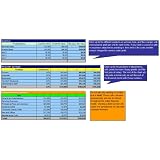
Understanding all recurring expenses associated with property ownership is vital for accurate cash flow projections. These costs extend beyond the mortgage payment and significantly impact overall profitability. A typical example often cited involves a $400,000 property with a 20% down payment. The monthly mortgage payment, which includes principal and interest, can be calculated using tools like MortgageCalculator.org; for this example, it might be $1,717. Property taxes, which vary by state (e.g., approximately 1.2% of the purchase price in California, amounting to $400 per month on a $400,000 property), must be factored in. Homeowner’s insurance typically ranges from $100 to $150 per month, with specific quotes advised from an insurance agent. Additionally, a buffer for miscellaneous expenses like gardening, pest control, or minor repairs (e.g., $200 per month) is wise. Finally, an allowance for vacancy periods and tenant turnover costs (e.g., $150 per month) ensures a more realistic projection of costs, bringing the total monthly expenses for such a property to around $2,600.10. Interpreting Your Return on Investment (ROI)
Once all ownership costs are determined, the potential for cash flow and overall return can be assessed. If the example $400,000 property rents for $3,200 per month against $2,600 in expenses, a positive cash flow of $600 per month is achieved. This translates to an annual cash flow of $7,200 from an $80,000 down payment, yielding a 9% cash-on-cash return. Beyond immediate cash flow, the reduction of the loan’s principal contributes significantly to equity accumulation. In the first year, an additional $4,700 might be paid towards the principal. This means the total first-year return, combining cash flow and equity build-up, reaches $11,900 on an $80,000 investment, representing nearly a 15% return. This comprehensive view of returns is crucial for understanding the full financial benefit of **buying your first rental property**.Step 4: Smart Renovations for Maximum Value
Strategic renovations can significantly enhance a property’s appeal, rental income, and overall value. Focusing on cosmetic upgrades rather than costly structural issues is often the most profitable approach.11. Targeting Cosmetic Upgrades
Properties that possess sound “unsexy” fundamentals—such as a solid roof, foundation, updated plumbing, and electrical systems—but appear cosmetically dated offer significant opportunities. These might include homes with 1970s or 1980s aesthetics, outdated kitchens, old bathrooms, worn floors, or peeling paint. Relatively inexpensive and quick cosmetic fixes can dramatically increase both rental income and property value. Imagine if $30,000 is spent on cosmetic improvements that then increase monthly cash flow by $600. This represents an exceptional return on investment (ROI). Developing an eye for these specific opportunities comes with experience and viewing many properties.12. Navigating Contractor Selection
Identifying reliable contractors is a crucial step in the renovation process. It is advisable that at least three bids be obtained for any planned work. Platforms like Yelp can be useful for finding contractors with a rating of four stars or higher, and their reviews should be carefully scrutinized. When meeting with potential contractors, an extensive list of questions should be prepared. Their opinions on specific approaches and recommendations for materials should be sought. This proactive engagement helps in gaining knowledge and ensures the chosen professional aligns with your vision and budget.13. Budgeting for Reality
A common challenge in renovations is adhering to initial cost and timeline estimates. It is consistently observed that projects tend to exceed their initial projections by approximately 20% in both cost and duration. Therefore, budgeting for this 20% contingency is a pragmatic approach. If a contractor provides a bid of $20,000, it is prudent to anticipate the final cost potentially reaching $24,000. Similarly, a one-month timeline should realistically be stretched to a month and a half. This realistic budgeting prevents financial strain and unexpected delays, ensuring a smoother renovation process.14. Tenant-Proofing Your Investment
When renovating a property destined for tenants, material selection should prioritize durability and ease of maintenance over luxury. For example, instead of scratchable hardwood floors, durable laminate is often recommended. Similarly, imitation-looking stone or other robust, low-maintenance countertops are preferred over expensive options prone to cracking or staining. Tile floors are frequently cited as being nearly indestructible, making them an excellent choice in many areas. Carpet should be avoided whenever possible, as it quickly becomes soiled and often requires replacement after each tenant, leading to recurring costs. Any expensive or delicate fixtures are best bypassed, as the adage suggests, “if it can possibly break, a tenant will find a way to break it.”15. Strategic Location Choices
The adage “location, location, location” holds undeniable truth, especially for rental properties, as it is the one factor that cannot be changed. Certain locations are best avoided to maximize long-term value and minimize tenant issues. Properties situated directly adjacent to freeways, busy streets, or those with street lights at either end that encourage through-traffic are generally less desirable. Properties backing onto large apartment buildings or commercial complexes, such as big parking lots, can also detract from value. These factors can negatively impact resale value, limit future appreciation, and potentially lead to difficulties in attracting quality tenants. Opting for quieter, more residential locations generally leads to greater long-term success when **buying your first rental property**.Step 5: Making and Negotiating Offers
Once a suitable property is identified and its financial viability confirmed, the next phase involves making offers and navigating the negotiation process. This requires a blend of objectivity and strategic flexibility.16. The Art of the Low, Smart Offer
When making an offer, it is essential to approach the process with emotional detachment, allowing the numbers to dictate your price. It is common for initial offers to be on the lower side, set at a price point where the property genuinely makes financial sense as an investment. This often means losing out on multiple offers, a reality that should be accepted without personalizing the outcome. The objective is to acquire a property that fits the calculated investment criteria, not simply to “win” a bidding war. A property is considered a good investment only if the numbers align with your financial goals at the purchase price.17. The Indispensable Realtor
Working with a highly competent realtor is crucial during the offer and negotiation phases. A good agent possesses in-depth knowledge of contracts, understands effective negotiation strategies tailored to specific deals, and can provide invaluable assistance. Their expertise can prevent costly mistakes and ensure a smooth transaction. Conversely, a suboptimal real estate agent can complicate the process, potentially causing lost deals and significant frustration. It is recommended that realtors be interviewed and selected based on responsiveness, experience, and strong references, often acquired through word-of-mouth. Prompt communication is a key indicator of an effective and dedicated agent.18. Strategic Negotiation
During negotiations, it is important to resist the urge to overpay due to excitement or competitive pressure. The goal is to secure a fair price that maintains the property’s investment viability. However, being overly stubborn and unwilling to negotiate on a few thousand dollars for an otherwise perfect property can also be detrimental. There is often a balance to be struck between seeking a “steal” and paying a fair price for quality, peace of mind, and an easier transaction. It is often preferable to pay slightly more for a property in a desirable area with quality tenants than to save money on a lower-end property that carries higher risks and potential management headaches.Step 6: Due Diligence Through Inspections
Once an offer is accepted and the property is under contract, the due diligence period begins. Comprehensive inspections are critical to uncover potential issues and provide a basis for further negotiation.19. Comprehensive Property Inspections
During the inspection phase, it is advisable that as many aspects of the property as possible be thoroughly examined. This includes critical components such as the roof, electrical systems, plumbing, foundation, and sewer line. Additionally, inspections for mold, radon gas, or septic tank issues should be considered based on the property’s specifics and location. It must be understood that even newly constructed or seemingly perfect properties will likely have some issues identified during a meticulous inspection. The purpose is not to find a flaw-free property, but rather to identify all existing issues and accurately estimate their repair costs.20. Leveraging Inspection Findings for Negotiation
Upon completion of inspections, a detailed list of identified issues and their estimated repair costs should be compiled. This information then becomes a powerful tool for a second round of negotiation with the seller. A request for a credit or a price reduction to compensate for these issues should always be made. Even if the seller initially states the property is being sold “as is” with no concessions, asking for a credit carries no risk. More often than not, sellers are willing to provide some form of compensation to keep the deal moving forward, making this a valuable opportunity for the buyer to refine the purchase price further.Step 7: Finalizing the Deal: Closing Costs for Your First Rental Property
As the escrow process progresses, understanding the various closing costs involved is essential for budgeting and a smooth transaction. These fees are separate from the down payment and purchase price.21. Demystifying Escrow and Lender Fees
During escrow, several fees will be incurred, including various closing costs, lender fees, and other miscellaneous charges. On average, these costs typically amount to about 1% of the property’s purchase price. For example, a $400,000 property might incur approximately $4,000 in these additional fees. A more detailed breakdown of these costs is often provided in dedicated resources, but it is important to budget for them in addition to the down payment and any renovation funds. Awareness of these expenses prevents surprises and ensures financial preparedness for the final stages of acquiring your **first rental property**.Step 8: Scaling Up Your Real Estate Portfolio Beyond Your First Rental Property
The acquisition of a first rental property marks a significant milestone, but it is often just the beginning of a larger investment journey. Strategic scaling is key to building substantial wealth.22. The Long-Term Vision
After **buying your first rental property**, it is generally recommended that the property be held for about one to one and a half years. This period allows for acclimatization to property management, the establishment of good tenant relationships, and a deeper understanding of the investment’s performance. Once comfortable, the process of saving for another down payment and repeating the acquisition cycle is initiated. Each subsequent deal refines your skills in identifying opportunities, managing renovations, and negotiating effectively. While a multi-million dollar real estate empire is not built overnight, consistent application of these steps can lead to significant wealth accumulation over a decade or two.23. Achieving Financial Independence
Imagine if a strategy involves buying a duplex every other year. Within ten years, this approach could result in the ownership of five duplexes, totaling ten cash-flowing units. If these properties are allowed to mature and mortgages are paid down over 30 years, the investor could eventually own five income-producing properties free and clear. This scenario represents a powerful pathway to a very comfortable retirement, generating substantial passive income. This foundational approach makes **buying your first rental property** not just a transaction, but a strategic step toward substantial financial freedom.Your Rental Property Q&A: Beyond the Buying Steps
How much money do I generally need for a down payment on my first rental property?
Lenders typically require a substantial down payment of 15% to 20% of the purchase price for investment properties. This is higher than for a primary residence and demonstrates a greater commitment from the investor.
What credit score should I aim for when trying to get a mortgage for a rental property?
It is ideal to have a credit score above 720, with 740 or higher often securing the best interest rates from lenders. A lower score can lead to increased interest rates and higher monthly payments.
Before I start looking at properties, what should I do to understand my budget?
It’s highly recommended to speak with a lender early to understand your borrowing capacity and get pre-qualified. This helps you focus on properties within your affordable range and streamlines the offer process later.
What does it mean for a rental property to ‘cash flow,’ and why is it important?
For a property to ‘cash flow,’ it means the rental income it generates is greater than its total monthly expenses, resulting in a profit. It’s crucial that a property either cash flows positively or at least breaks even from day one to ensure a sustainable investment.
What types of renovations are generally best for increasing the value of a first rental property?
Focus on cosmetic upgrades like updating kitchens, bathrooms, and flooring, especially if the property has sound structural elements. These relatively inexpensive improvements can significantly increase rental income and overall property value.